
Inside the Bastrop County Transportation Blueprint: SH 130, SH 71, and the Road Network That $10 Billion Demands
When $10 billion in industrial and commercial development arrives in a predominantly rural county, the first question residents ask is usually about water. The second question—often asked while sitting in traffic—is about roads.
Bastrop County’s location along the State Highway 71 corridor, connecting Austin to Houston, and its proximity to the SH 130 toll road, made it a prime target for the current tech and film boom. But that same geographic advantage places enormous strain on legacy infrastructure.
Here is how Bastrop County, TxDOT, and regional planning authorities are working to build the transportation blueprint required to support the Big Movers anchor projects while maintaining quality of life for residents.
The State Highway 71 Artery
SH 71 is the lifeblood of Bastrop County’s economy. It is the primary freight corridor for the new manufacturing hubs and the daily commute artery for thousands of residents.
To manage the increased load, TxDOT has accelerated several critical projects along the corridor:
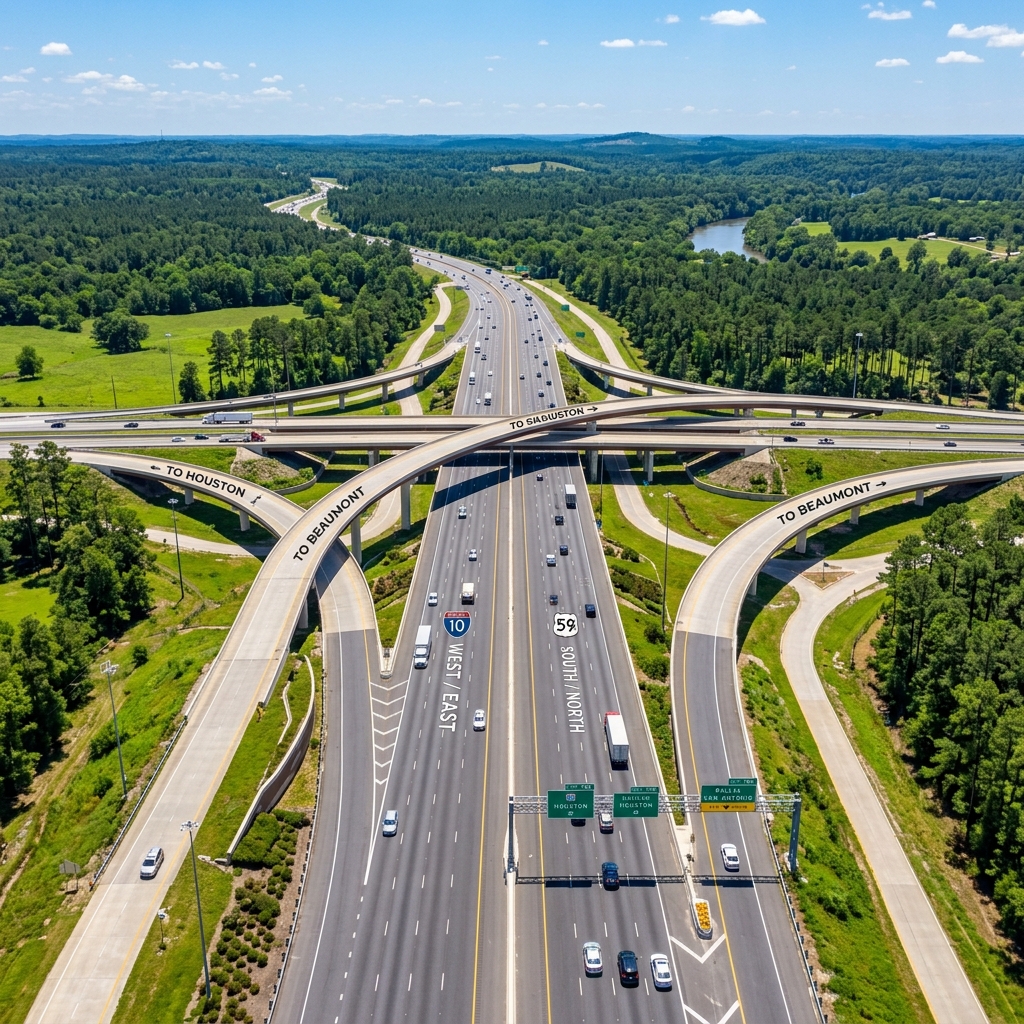
- Overpasses and Grade Separations: The transition from a signalized highway to a controlled-access freeway continues, with new overpasses designed to eliminate bottlenecks at major intersections, improving both safety and freight throughput.
- Frontage Road Expansion: Expanding the frontage road network is critical for local traffic. It separates high-speed regional transit from the local trips between Bastrop, Cedar Creek, and Del Valle, keeping residents off the main lanes for everyday errands.
- The SH 130 Connection: The interchange at SH 71 and SH 130 is the most important logistics node in the region. Smooth, high-capacity access here allows freight from the Greenport semiconductor campus or the SpaceX facility to bypass Austin entirely and access the national interstate network.
The County Road Challenge
While TxDOT manages the state highways, Bastrop County is responsible for the capillary network—the county roads that connect the ranches, subdivisions, and new industrial sites to the main corridors.
This is where the strain is often most acute. Roads originally engineered for pickup trucks and agricultural equipment are now carrying heavy construction machinery and increased commuter volume.
To address this, Bastrop County has utilized strategic road bonds and proactive developer agreements. When a major facility like Wyldwood Studios or a large-scale master-planned community enters the county, the development agreements often include significant contributions to local road improvements, ensuring that growth pays for the infrastructure it requires.
Freight Logistics and the Supply Chain
The type of industry moving into Bastrop County dictates specific transportation needs. Semiconductor manufacturing at Greenport requires precision logistics—vibration-free transit for highly sensitive equipment and reliable just-in-time delivery for chemical inputs.
Similarly, the film production ecosystem anchored by Wyldwood Studios and Line 204 requires the frequent movement of massive set pieces, specialized lighting equipment, and large crew bases.
The SH 130 corridor is the pressure relief valve for this freight volume. By offering a high-speed, congestion-free route north to the Dallas-Fort Worth metroplex or south toward San Antonio, SH 130 allows Bastrop-based companies to operate efficient, national supply chains without dragging heavy freight through the center of Austin.
Looking Ahead: The Commute Pattern Shift
Historically, Bastrop County was a bedroom community. The dominant commute pattern was outbound in the morning toward Austin and inbound in the evening.
The Big Movers projects are reversing that flow. Bastrop County is becoming a major employment center in its own right. As thousands of high-paying jobs in advanced manufacturing, engineering, and media production come online, the county is attracting inbound commuters from Lee, Fayette, and Caldwell counties.
Managing this complex, multi-directional traffic flow is the defining infrastructure challenge of the next decade. The transportation blueprint being built today—combining TxDOT mega-projects with localized county improvements—is designed to ensure that Bastrop County remains connected, competitive, and moving forward.