
Permitting Timelines Compared: Bastrop County vs. Five Other Texas Data Center Markets
Permitting Timelines Compared: Bastrop County vs. Five Other Texas Data Center Markets
For a hyperscale data center on a greenfield Texas site, total permitting and entitlement timelines typically run 12 to 36 months from site selection to vertical construction, depending on the county and the level of municipal involvement. Bastrop County’s structural model, where major projects are sited in unincorporated land under direct county jurisdiction with a pre-negotiated Chapter 381 Agreement, has consistently delivered the shorter end of that range. Williamson County’s distributed city-by-city authority, Hays County’s Edwards Aquifer review, and Bexar County’s metro-density constraints all add structural friction that Bastrop County does not impose.
Why This Comparison Matters in 2026
Texas is poised to pass Virginia as the largest data center market in the United States within three years, according to recent Bloomberg projections. The Austin-San Antonio corridor alone has 7,823 megawatts of planned capacity against just 1,154 megawatts operating, per March 2026 Cushman & Wakefield data. Vacancy in operating Texas data centers is essentially zero. Demand has overwhelmed every conventional measure of regional capacity, and the limiting factors have shifted from “is there land” to “how fast can a project move from term sheet to commissioning.”
For corporate site selectors and infrastructure developers, that means permitting timelines have become one of the most consequential variables in a site decision. A six-month difference in time-to-power on a 96-megawatt building is real revenue. On a multi-gigawatt campus, it can be a deal-breaker.
This post compares the structural permitting environments of six Texas markets that consistently appear on hyperscale site selection lists: Bastrop, Williamson, Tarrant, Pecos, Bexar, and Hays counties. The framework below is general guidance, not a contractual commitment from any of the named jurisdictions, and any specific project’s timeline depends on dozens of variables that no public comparison can predict.
What Drives a Texas Data Center Permitting Timeline
Six structural factors determine how long a Texas data center project takes to clear permitting and entitlement.
Whether the site is incorporated or unincorporated. Texas counties have limited zoning authority by state law. When a data center is sited inside an incorporated city, the city’s planning and zoning, building code, and council approval process applies. When the site sits in unincorporated county land, the county process applies, which is typically lighter on zoning but still requires platting, driveway permits, fire marshal review, and infrastructure coordination.
Whether a 381 Agreement or municipal economic development agreement is pre-negotiated. A Chapter 381 county agreement or a similar Chapter 380 city agreement can be negotiated in advance of a specific anchor tenant, which dramatically shortens the runway for a project that fits the agreement’s parameters. Where these agreements exist, anchor tenants are not negotiating from scratch.
ERCOT large-load interconnection queue position. Texas operates a connect-and-manage interconnection process that the Belfer Center has identified as one of the fastest in the United States. Even so, the queue for new large-load interconnections has grown into the hundreds of gigawatts of proposed demand. Sites with existing utility commitments and defined energization schedules are now structurally ahead of sites that need new substations and transmission upgrades.
Senate Bill 6 compliance. Signed in June 2025, SB 6 establishes new rules for very large electrical loads in Texas, including a 75-megawatt threshold for certain large-load standards. Projects above the threshold face additional scoping and review requirements.
Sensitive overlay zones. The Edwards Aquifer Recharge Zone, FEMA floodplain overlays, and certain habitat conservation areas trigger additional environmental review under TCEQ and federal authorities. Sites inside these overlays carry more review time than sites outside them.
Water and wastewater service capacity. Even closed-loop hyperscale facilities require make-up water, fire suppression supply, and wastewater service. Sites inside an existing water district with executed service agreements move faster than sites that require new utility extensions.
Bastrop County: The Structural Advantages
The current Bastrop County data center wave is concentrated in unincorporated land where county jurisdiction applies and the major economic development agreements are already in place.
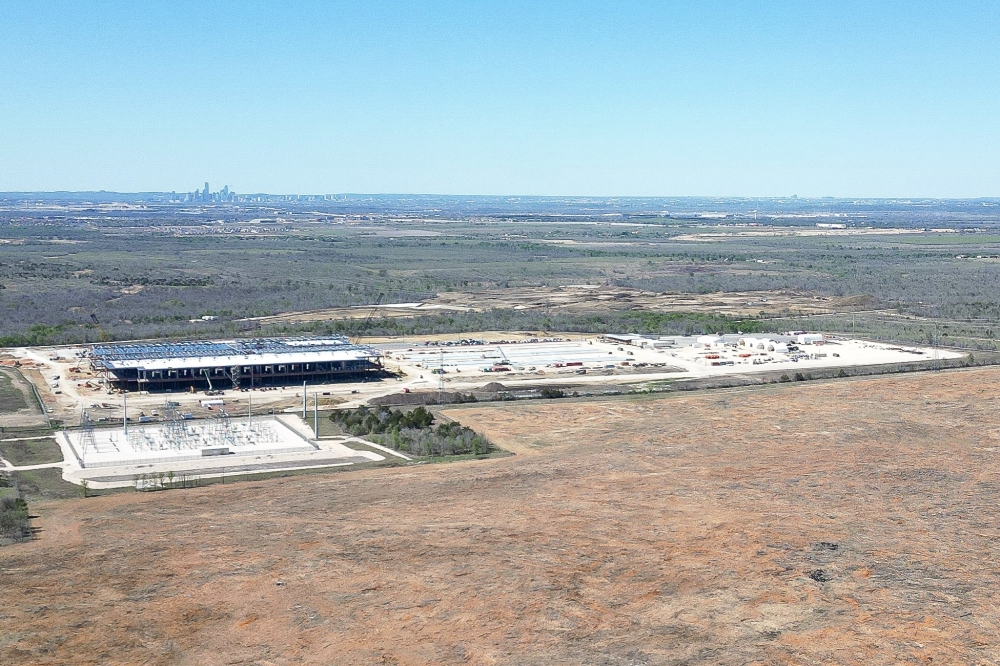
EdgeConneX is building its $4.4 billion AUS01 campus at 8001 Wolf Lane in Cedar Creek, on unincorporated land. The Greenport campus operates under a unanimously approved Chapter 381 Agreement that was structured for the project boundary as a whole, providing a 75 percent share of new property, sales, and hotel occupancy tax revenue back to the developer for 30 years. A separate $1.4 billion data center is rising at FM 535 and Wolf Lane.
The structural advantages this configuration provides are concrete:
No municipal zoning friction. Major Bastrop County data center projects are not going through a city planning and zoning commission, a city council first reading, a city council second reading, and a separate building permit process. The county lacks zoning authority by state law, which is sometimes treated as a negative in resident-protection conversations but is unambiguously a positive for time-to-power. The county still requires platting, driveway permits, fire marshal review, on-site sewage facility approval where applicable, and floodplain compliance, but the process is materially faster than a parallel city-and-county track.
Pre-negotiated 381 Agreements. The county has demonstrated repeatedly that it will execute Chapter 381 Agreements at scale and on tight timelines. The Greenport agreement covers a 5,426-acre campus. The EdgeConneX abatement passed unanimously through the Commissioners Court. The county has a documented pattern of moving quickly on qualified projects.
ERCOT connect-and-manage friendly. Bastrop County sits inside the ERCOT footprint with utility service available from Bluebonnet Electric Cooperative, the LCRA Transmission Services Corporation, and Oncor in nearby corridors. The county is on the favorable side of the Texas connect-and-manage interconnection process, with multiple existing transmission corridors and active substation expansions tied to the EdgeConneX, SpaceX, and Greenport buildouts.
Outside the Edwards Aquifer Recharge Zone. Bastrop County is east of the Edwards Aquifer Recharge Zone, which removes one of the most significant environmental review tracks that adds time and cost to projects in Hays and parts of Travis County.
Single point of contact. Major projects work through the Bastrop Economic Development Corporation and the Bastrop County Commissioners Court directly, rather than through five overlapping municipal jurisdictions. The site selector’s interlocutor list is short, named, and accessible.
Williamson County: The Dell-and-Samsung Cluster Tradeoff
Williamson County is the largest Central Texas data center market by current capacity, anchored by the Samsung Taylor semiconductor fab and the Dell Technologies global headquarters in Round Rock. More than 70 projects are tracked across the broader Austin-San Antonio corridor, with Williamson capturing a disproportionate share due to power infrastructure, fiber, and available land.
Williamson County’s structural permitting profile, however, is meaningfully more complex than Bastrop County’s.
A March 2026 Hello Georgetown analysis identified the core issue plainly: Williamson County itself has limited authority over data center approvals. That authority rests with the individual cities that annex and zone the land, which creates a patchwork of policies and incentive structures across Round Rock, Hutto, Taylor, Cedar Park, Leander, Liberty Hill, Georgetown, and the unincorporated portions of the county.
This patchwork has real implications. The Switch project at 300 Dell Way required city rezoning of 36.76 acres in 2021 and an additional 32.48 acres in 2023, two separate municipal processes for a single anchor tenant. The Skybox proposal required a first reading in 2025 and a separate second reading on a 29.69-acre rezoning. Each of these municipal processes runs its own zoning, public hearing, and council approval timeline.
Williamson County also faces ERCOT large-load constraints that have become a national story. The corridor’s planned capacity has overwhelmed currently operating capacity by roughly seven to one, which means new projects without firm utility commitments are increasingly competing for finite interconnection slots.
For site selectors who need scale and existing operator presence, Williamson is unambiguously a Tier 1 Texas market. For site selectors who optimize for time-to-power, the city-by-city patchwork adds friction that Bastrop County’s unincorporated, county-jurisdiction structure does not.
Tarrant and Dallas Counties: The DFW Metro Constraint
The DFW metro hosts some of the largest existing operating data centers in Texas, including DFW III-I (262 MW in Ellis County), the Fort Worth Data Center (200 MW in Tarrant), and CyrusOne DFW (90 MW in Dallas). New hyperscale capacity continues to add to the corridor.
Tarrant County’s structural permitting profile is heavily city-driven. Hyperscale sites typically sit inside Fort Worth, Arlington, Grand Prairie, or one of the smaller incorporated suburbs, each with its own planning and zoning process, public hearings, and council approvals. Dallas County’s profile is similar.
For site selectors, the DFW corridor offers deeper existing fiber and operator presence than Bastrop County. It also offers higher land costs, more municipal review steps, and a more constrained ERCOT large-load environment in the most desirable submarkets. The structural permitting timeline for a new hyperscale project in the urban DFW core is generally longer than the equivalent Bastrop County timeline, before any specific project variables are considered.
Pecos County and West Texas: Speed at the Cost of Cluster
Pecos County and the broader Permian Basin region have become a major Texas data center frontier, anchored by the GW Ranch project (7,650 MW planned), the Microsoft Pecos Data Center (2,500 MW planned), and the LandBridge surface acreage development across Loving, Winkler, Reeves, Pecos, and Andrews counties.
LandBridge CEO Jason Long has publicly described West Texas as having “vast, contiguous surface availability, attractive natural gas dynamics, significant water availability, and favorable grid outlook and permitting timeline.” The structural advantages are real. Land is essentially unlimited at scale, the regulatory environment is light, and natural gas and renewable resources are immediately adjacent.
The tradeoffs are equally real. West Texas sites are 350 to 500 miles from the major fiber backbones, the technical workforce, and the airline connectivity that hyperscale operations need for ongoing operations. Building 2 GW of Permian Basin capacity is structurally faster than building 2 GW in the Austin corridor. Operating that capacity once it is built carries different long-term tradeoffs than operating in a market with the workforce and connectivity Bastrop County offers.
For data center categories where ultra-low latency to end users is not the primary driver (training-heavy AI workloads, large-scale crypto mining, certain high-performance computing applications), the Permian Basin is increasingly the right answer. For applications that need proximity to Austin’s developer base, San Antonio’s defense and biomedical clusters, or the I-35 fiber corridor, Bastrop County offers a different and complementary profile.
Bexar County: San Antonio Density
Bexar County hosts substantial existing data center capacity, including the 200 MW Stream Data Center San Antonio cluster and CPS Energy’s growing infrastructure investments. San Antonio has been a Texas data center market for two decades, with deep operator presence and mature fiber.
Bexar County’s structural permitting profile is shaped by metro density. Most hyperscale sites are inside the City of San Antonio or one of the surrounding incorporated suburbs, each with its own planning and zoning process. Land costs are meaningfully higher than Bastrop County. Available megasites in the urban core are increasingly scarce.
For site selectors, Bexar County offers deep existing market presence and connectivity. The structural permitting timeline for a new hyperscale project in the San Antonio metro is generally comparable to or longer than the Williamson County profile, again before any specific project variables are considered.
Hays County: The Edwards Aquifer Question
Hays County, immediately west and south of Bastrop County, has become an active data center market with growing operator interest. The structural permitting environment, however, is shaped by one of the most significant environmental overlays in Texas.
The Edwards Aquifer Recharge Zone covers substantial portions of Hays County. Any commercial or multifamily development in the Recharge Zone triggers an Edwards Aquifer Protection Plan review through the Texas Commission on Environmental Quality, which adds material time to the entitlement process. Hays County’s published Development Services FAQ notes the recharge zone review explicitly. Sites outside the Recharge Zone in Hays County face less environmental friction, but the dominant industrial corridors in the county overlap the protected area.
Bastrop County, sitting east of the Edwards Aquifer Recharge Zone, does not impose this review track on data center projects. That is a structural permitting timeline difference that no amount of project execution can erase from the Hays County profile.
The Honest Caveats
A comparison post like this earns its credibility by being honest about what it cannot do.
First, no public comparison can substitute for direct site-specific due diligence with the relevant county economic development corporation, planning office, and utility provider. The structural advantages described here reflect general patterns documented in public sources. A specific project’s timeline depends on the size of the load, the cooling design, the water source, the utility service area, the title condition of the land, and a dozen other variables.
Second, every county on this list has projects in active development. Williamson, Tarrant, Pecos, Bexar, and Hays Counties are all real Texas data center markets, and a project that fits one of those markets better than Bastrop County should be there. The point of this post is not that Bastrop County is the right answer for every hyperscale project. The point is that for projects that fit the Bastrop County structural profile, the permitting timeline advantages are real and documented.
Third, the Texas data center regulatory environment is moving. SB 6 took effect in June 2025. Local jurisdictions across Texas are debating new restrictions, water-use disclosure rules, and noise ordinances. Any timeline projection in 2026 needs to be revalidated in 2027 and beyond.
What Site Selectors Should Actually Ask
For corporate site selectors evaluating Bastrop County against the alternatives, the questions worth bringing to the BEDC, the County Judge’s office, and the relevant utility providers are:
- What is the current ERCOT large-load queue position for this specific transmission node, and what energization date can be committed in writing
- Is the proposed site inside or outside the FEMA floodplain, and what flood elevation work is required
- What water and wastewater service capacity is currently available, and what utility service agreement terms are on offer
- Does a Chapter 381 Agreement covering this site already exist, or is one being negotiated
- What fire marshal, on-site sewage facility, and driveway permit review timelines apply to this site type
- What local opposition, if any, has been organized against data center development in the immediate vicinity, and what is the current Commissioners Court position
These are the questions a serious site selector asks. Bastrop County’s BEDC, led by Director of Tourism and Economic Development Adena Lewis and the broader BEDC team, is structured to answer them quickly and with named accountability.
The Bigger Picture
The Bastrop County data center market exists today because the structural framework was put in place years before the AI demand wave arrived. The 381 Agreements are signed. The unincorporated land is platted. The ERCOT corridor is built. The fiber redundancy is in place. The economic development team is professionalized. The Commissioners Court has a documented track record of approving qualified projects.
That framework did not happen by accident. It is the result of deliberate, sustained work by Bastrop County leadership, the BEDC, the Bastrop ISD board, and the various Emergency Services Districts that have aligned around a shared regional vision. The result is a county where hyperscale data center projects move from term sheet to vertical construction faster than the comparable timeline in most of the other Texas markets a corporate site selector is currently evaluating.
That speed has a name. It is called Building Bastrop County.
Want to take the next step? Connect with the Bastrop Economic Development Corporation, explore the Big Movers anchor projects already operating or under construction in the county, or read about the twelve trades and degrees Bastrop County students should pursue right now that train the workforce your hyperscale project will need.