
ERCOT Zone South Explained: How Bastrop County Became the Power Grid's Next Sweet Spot
When corporate site selectors evaluate Central Texas for their next billion-dollar mega-project, the first question is rarely about local taxes, water, or even workforce availability. In the modern era of hyperscale computing and advanced manufacturing, the single most critical constraint is always the same: Power.
As artificial intelligence (AI) data centers, semiconductor fabrication plants, and advanced manufacturing facilities require increasing hundreds of megawatts of continuous, reliable power, the resilience and capacity of the local electrical grid have become paramount. For decades, tech development clustered heavily to the north and west of Austin. However, those heavily congested power corridors are now facing severe transmission bottlenecks and multi-year interconnection queues.
This grid congestion has sparked a dramatic geographical shift, pulling the state’s most critical high-tech industrial demand directly into the “sweet spot” of the Texas grid: Bastrop County.
The ERCOT Zone South Advantage
The Electric Reliability Council of Texas (ERCOT) manages the flow of electric power to more than 26 million Texas customers, representing about 90% of the state’s electric load. ERCOT divides the state into specific load zones, and Bastrop County sits in a strategically advantageous position within ERCOT Zone South.
Unlike the congested nodes surrounding the traditional tech corridors, the eastern trajectory out of Austin offers robust transmission capacity. Bastrop County benefits from direct access to a highly diversified generation mix managed by the Lower Colorado River Authority (LCRA) and Bluebonnet Electric Cooperative. This unique geographical positioning allows heavy industrial users to tap into stable baseload generation without triggering the severe localized brownout risks seen in other rapidly developing tech hubs.
The Fayette-to-Lost Pines 345kV Corridor
The secret engine behind Bastrop County’s $10 billion investment pipeline is its underlying transmission architecture.
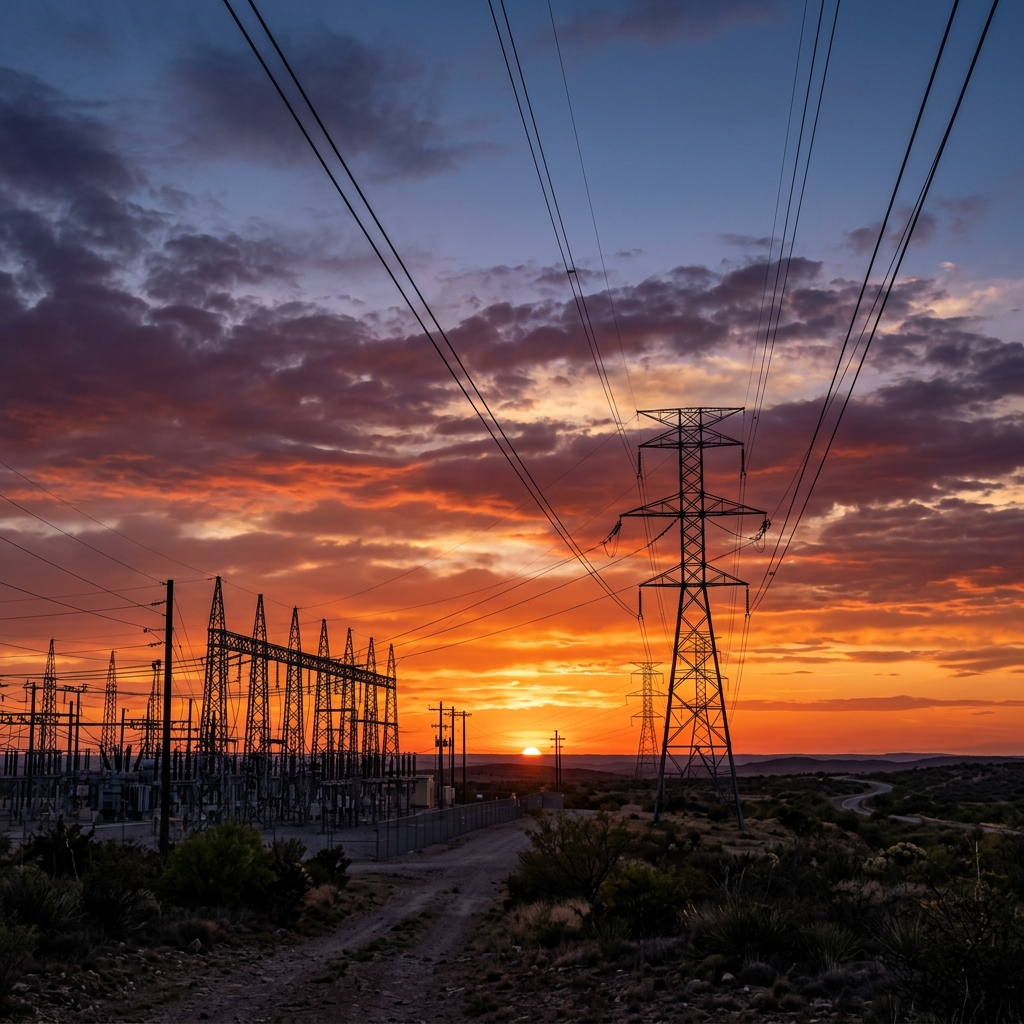
The 345-kilovolt (kV) transmission lines running through Bastrop County serve as a massive, high-capacity critical artery for the region. Specifically, the corridor linking the Fayette Power Project to the Lost Pines 1 Power Park creates a literal superhighway of electricity.
This specific infrastructure ensures that massive, power-hungry projects—like the EdgeConneX data center campus and the Greenport semiconductor technology park—have a reliable, high-capacity path to power.
Why does 345kV matter? For hyperscale data centers requiring upwards of 100 to 500 megawatts (MW) of power, standard distribution lines are fundamentally insufficient. These mega-facilities must connect directly to high-voltage transmission lines via dedicated, privately funded substations. Bastrop County’s existing 345kV backbone significantly reduces the timeline for substation construction and ERCOT interconnection studies. While a data center in a congested zone might wait 4 to 6 years just to get power approval, Bastrop’s transmission proximity can shave years off a project’s “speed-to-market”—giving the county a structural edge over competing regions nationwide.
A Resilient, Diversified Generation Mix
Modern corporate boards are increasingly demanding not just reliable power, but clean power to meet their strict ESG (Environmental, Social, and Governance) targets. The grid in Bastrop County offers both.
The LCRA portfolio and the surrounding ERCOT Zone South provide a highly resilient mix of legacy natural gas baseload generation (ensuring the lights stay on when the sun goes down or the wind stops blowing) and rapidly expanding renewable interconnections. Bastrop County is increasingly becoming home to utility-scale solar farms and Battery Energy Storage Systems (BESS). These massive battery installations help stabilize the grid, absorbing excess solar energy during the day and discharging it during peak evening demand hours.
This combination of unyielding stability for industrial operators and high sustainability metrics for corporate optics makes Bastrop the ultimate destination for 21st-century infrastructure.
Protecting the Residential Grid
A common concern among local residents is whether these massive tech campuses will “drain” the power from local neighborhoods or cause rolling blackouts.
In reality, the power architecture of these mega-sites actually protects the residential grid. Facilities like EdgeConneX and Greenport do not plug into the same neighborhood distribution lines that power residential subdivisions. Instead, they operate completely independently, directly tapping into the 345kV transmission lines via their own multi-million dollar, privately funded substations.
Because these corporations fund their own localized infrastructure upgrades, they do not pass grid expansion costs onto residential ratepayers. In fact, by establishing massive power draws on the transmission lines, these facilities often force upstream grid upgrades that ultimately increase the overall resilience of the entire regional network.
Powering the Future
Bastrop County’s unprecedented economic boom isn’t an accident; it is the direct result of strategic power infrastructure intersecting with overwhelming industrial demand. By sitting astride one of the most capable transmission corridors in Texas, Bastrop County has evolved from a rural bedroom community into the vital energy anchor of the Central Texas Innovation Corridor.