
Housing the Workforce: What 3,000+ New Jobs Mean for Bastrop County's Residential Market
When the “Big Movers” mega-projects in Bastrop County—SpaceX, EdgeConneX, Greenport, Wyldwood Studios, and Line 204—hit full operational capacity, they will inject more than 3,000 high-skill, high-wage jobs directly into the local economy. Indirectly, the multiplier effect on local services, retail, and healthcare will create thousands more.
For corporate relocation executives, site selectors, and local officials, the immediate follow-up question to this unprecedented capital investment is critical: Where are all these people going to live?
Bastrop County is currently navigating a massive, generational expansion of its residential pipeline. The county is transforming from a quiet rural exurb into an economic anchor in its own right, and the housing market is racing to keep pace. Master-planned communities, significant infill projects within the city limits of Bastrop and Elgin, and new multifamily developments along the SH 71 corridor are being mobilized to absorb the incoming demand.
The Master-Planned Community Response
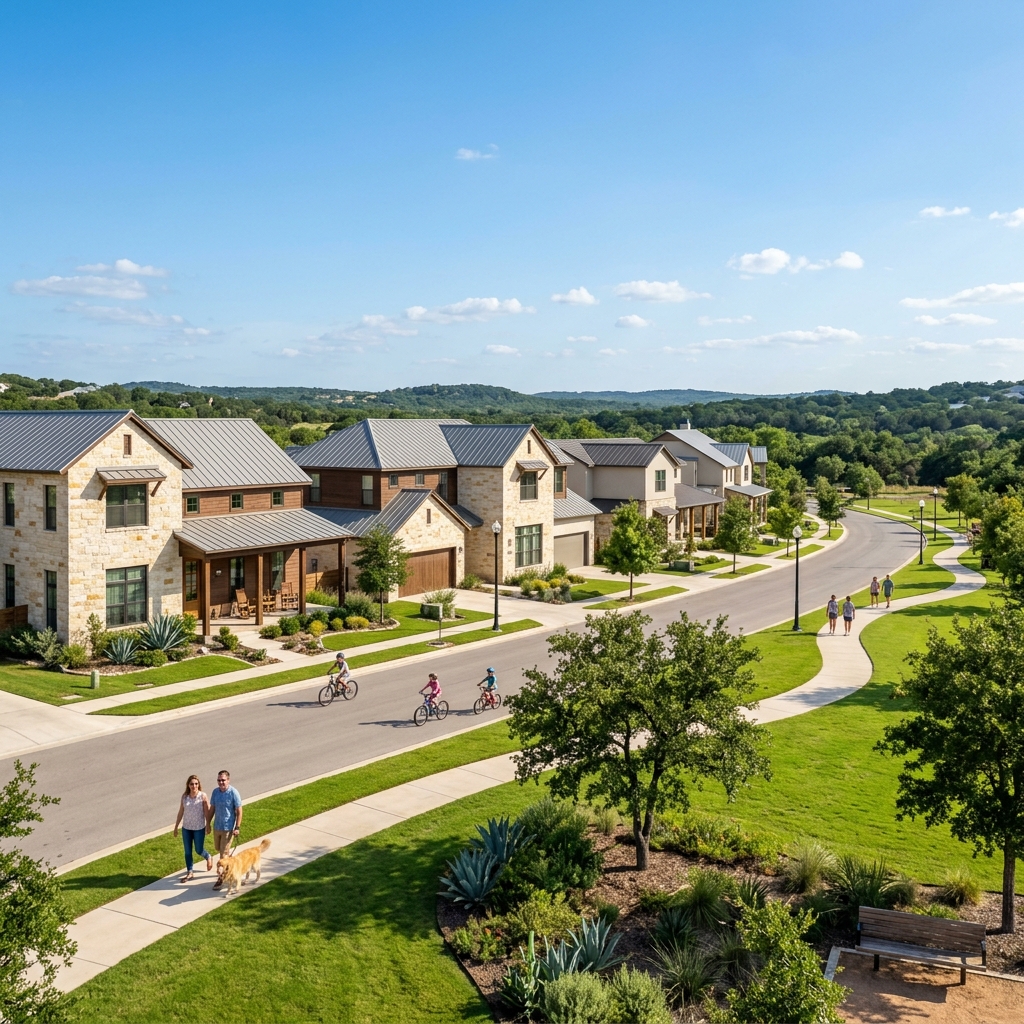
To accommodate the influx of engineers, technicians, studio personnel, and management executives, Bastrop County is leaning heavily into master-planned communities (MPCs). Unlike piecemeal subdivisions, MPCs offer the scale necessary to absorb hundreds of families while concurrently delivering the parks, trails, and commercial amenities that modern workforces expect.
Major developments like Adelton (a 348-acre community in Bastrop bringing up to 1,200 homes) and The Colony (a massive, multi-phase community near Riverside) are leading the charge. These developments are highly strategic. By concentrating density into well-planned, utility-rich nodes, the county can house thousands of new residents efficiently without carving up the historic ranches and open spaces that define the local culture.
Further north, Elgin is experiencing a similar wave with developments like Trinity Ranch and Brickston, providing vital residential capacity for the Samsung-adjacent corridor and the broader northern Bastrop County workforce.
The Multifamily and Build-to-Rent Pipeline
Homeownership is only half the equation. The transient nature of film production crews, the influx of young, single engineers, and the thousands of construction workers building the Big Movers projects require robust rental options.
Historically, Bastrop County possessed a very limited supply of Class A multifamily housing. That is changing rapidly. The SH 71 corridor is seeing a surge in apartment complex construction, particularly around Cedar Creek and the western edge of Bastrop city limits. Additionally, the “Build-to-Rent” (BTR) model—entire neighborhoods of detached, single-family homes managed as rental communities—is gaining a foothold. BTR offers the suburban lifestyle (yards, privacy) with the flexibility of a lease, a highly attractive option for newly relocated employees testing the waters before committing to a mortgage.
The Affordability Advantage: Bastrop vs. Austin
The primary driver for Bastrop County’s residential appeal is the commute-to-cost ratio. Despite rising local property values over the last five years, Bastrop County still offers a significant affordability discount compared to the Austin metro core (Travis County).
For a young engineer starting at SpaceX or a process technician at Greenport, buying a first home in Austin is financially daunting. In Bastrop County, however, the math works. The ability to attain homeownership, build equity, and enjoy a high quality of life—all while maintaining a commute under 15 minutes—is a massive recruiting advantage for local employers.
Furthermore, Bastrop’s proximity to SH 130 means that the county is also highly accessible for talent already residing in eastern Travis and Williamson counties, effectively widening the labor pool for Bastrop-based companies.
Preserving Character Through Concentrated Density
The fundamental tension in Bastrop County is how to manage this residential surge without losing the rural charm, the Lost Pines ecosystem, and the small-town feel that makes the area attractive in the first place.
The answer lies in infrastructure-led planning. By aligning residential permitting with the expansion of Aqua WSC water lines, municipal wastewater plants, and LCRA transmission corridors, the county is deliberately steering growth toward the SH 71 and Highway 290 corridors.
This strategy prevents “unchecked sprawl.” When 1,000 homes are built in a concentrated, master-planned node with its own water treatment and commercial center, it saves thousands of acres of working ranchland and loblolly pine forest from being subdivided into 5-acre ranchettes. Density, paradoxically, is the tool being used to save the country.
The Ecosystem View
Ensuring an adequate, varied housing stock is the final, critical piece of the economic development puzzle. A $10 billion commercial investment cannot succeed if the workforce has nowhere to sleep.
By aggressively expanding the residential pipeline, embracing a mix of single-family, multifamily, and build-to-rent products, and fiercely protecting the rural land outside the growth corridors, Bastrop County is proving that it can scale its population to match its industrial ambitions. The workforce isn’t just coming to work in Bastrop County—they are coming to call it home.