
Parks, Ranches, and Friday Night Lights: The Lifestyle That Growth Is Designed to Protect
Parks, Ranches, and Friday Night Lights: The Lifestyle That Growth Is Designed to Protect
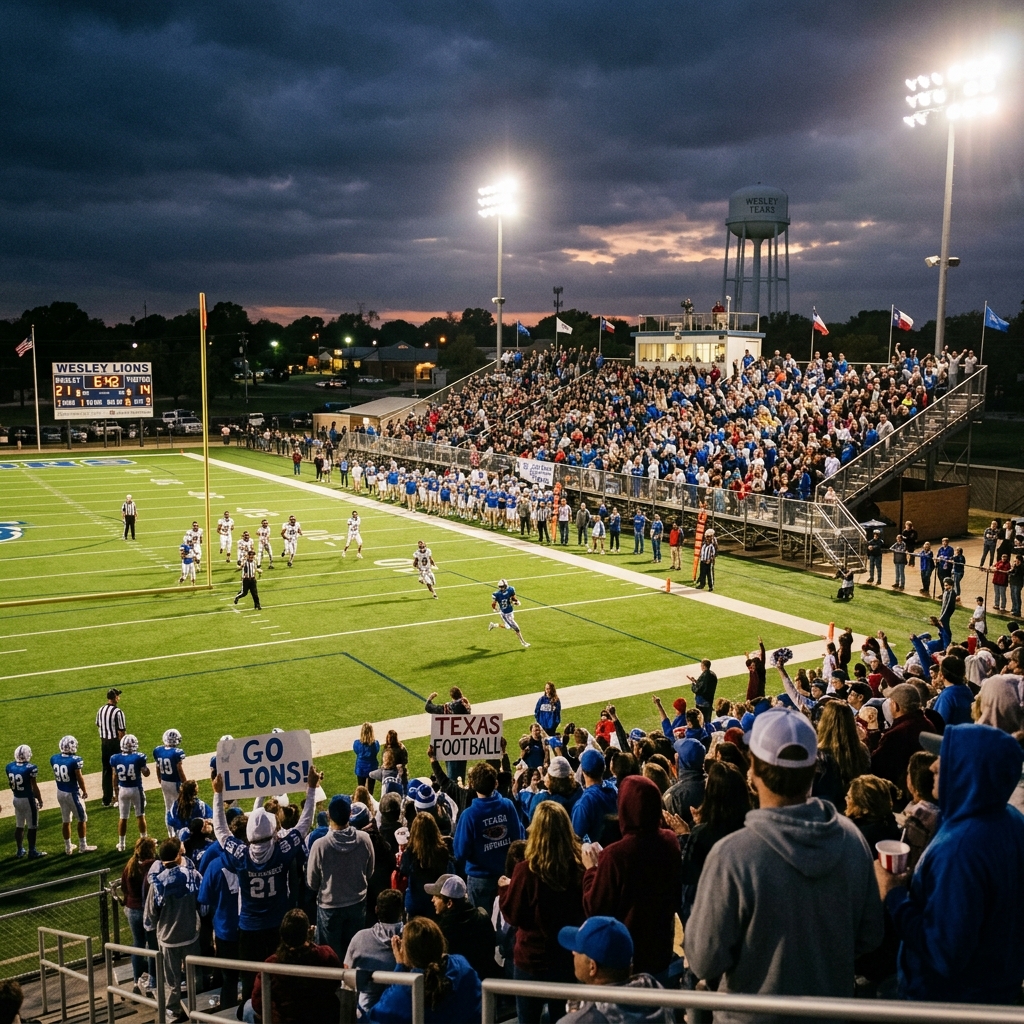
Bastrop County’s character is anchored by 6,600 acres of Bastrop State Park, the adjacent Buescher State Park, the 1,100-plus-acre McKinney Roughs Nature Park, the 13-mile Lost Pines forest that exists nowhere else west of East Texas, the working ranches that cover hundreds of thousands of acres, the historic squares of Bastrop and Smithville, the volunteer fire departments anchoring small communities, and the Friday night football lights at Memorial Stadium and Tiger Stadium. The Big Movers projects and the broader $10 billion of investment are designed to fund and protect that life, not replace it.
What Bastrop County Actually Is
Before there were data centers, soundstages, semiconductor plants, or hyperscale campuses, there was the land. Loblolly pines. The Colorado River. Working cattle on rolling hills. Tiger Stadium under Friday lights. The historic stone storefronts on Main Street in Bastrop. The Smithville square at sunset. The rodeo arena in September. The Easter sunrise service at Calvary at Bastrop.
That is the Bastrop County that the rest of this site exists to fund and protect. Every dollar of new commercial valuation, every new job at SpaceX or EdgeConneX or Wyldwood, every property tax dollar that lands on the BISD tax roll instead of on a homestead, exists in service of the lifestyle that drew people here in the first place and that keeps them here today.
This post is a walk through what that lifestyle actually looks like. The places, the institutions, the rhythms, and the people who carry them.
The Lost Pines
The single most distinctive natural feature of Bastrop County is the Lost Pines. A 13-mile stretch of loblolly pine forest that exists nowhere else this far west of the East Texas Piney Woods. Pollen records date the pines back 18,000 years. They are the western terminus of an ecosystem that survived three ice ages and stayed put when everything around it changed.
Bastrop State Park preserves 6,600 acres of that forest, including seven miles of hiking trail, the half-acre Lake Mina (stocked with bass, catfish, and sunfish, no fishing license required for in-park anglers), a swimming pool open May to September, and 13 rustic Civilian Conservation Corps cabins built in the 1930s that remain rentable today. The park’s rustic native stone and pine cabins are listed as a National Historic Landmark.
Buescher State Park, connected to Bastrop State Park by the 12-mile scenic Park Road 1C, adds a 30-acre stocked lake, six miles of hiking and mountain biking trails, screened shelters, and the only portion of the Lost Pines that escaped the 2011 wildfires. Together the two parks form the Texas Parks and Wildlife Department’s Lost Pines State Park Complex.
McKinney Roughs Nature Park, an LCRA showplace 1,100-plus-acre property west of Bastrop on Highway 71, adds 18 miles of multi-use trails for hikers, mountain bikers, and horseback riders. McKinney Roughs hosts the Zip Lost Pines zip line tours over the Colorado River canyons, a 40-foot rock wall, guided UTV tours, and Colorado River rafting. Day passes are $5 for adults, free for children twelve and under.
Together these three parks protect close to 9,000 acres of contiguous Lost Pines and Colorado River corridor. They are owned by the public. They are managed by professional conservationists. They are not going anywhere.
The 2011 Fire and the Recovery
Anyone who has lived in Bastrop County for more than a decade carries the same memory. Labor Day weekend, 2011. The Bastrop County Complex Fire. The most destructive wildfire in Texas history. Thirty-four thousand acres of the Lost Pines burned. More than 1,500 homes destroyed. Two lives lost. Ninety-six percent of Bastrop State Park damaged.
What happened next is the part that defines the place.
Over the following six years, more than 2 million loblolly pine seedlings were planted across Bastrop State Park by thousands of volunteers. Texas Parks and Wildlife rangers, Master Naturalists, school groups, churches, scout troops, and ordinary Bastrop County residents replanted the forest tree by tree. The Hidden Pines Fire of 2015 burned half of Buescher and reburned parts of Bastrop. The recovery continued. Today, the early successional forest is taking root and the ancient ecosystem is rebuilding itself in real time.
Bastrop County Judge Paul Pape, in a Texas Parks and Wildlife magazine interview years after the fire, captured the local attitude in one line: “Deal our hand and we’ll play it. It doesn’t matter what the cards are, we’ll make the best of it. And we have made the best of it, through thick and thin, through hell and high water.”
That is who Bastrop County is. The fire did not break it. The growth will not either.
The Colorado River
The Colorado River cuts through the heart of the county under Lower Colorado River Authority stewardship. Lake Bastrop, just east of town, offers 900 surface acres for fishing, swimming, kayaking, paddleboarding, and waterfront camping at North Shore Park and South Shore Park, connected by a 4.5-mile hiking and biking trail.
The river itself supports kayaking, canoeing, fishing, and seasonal rafting through McKinney Roughs and beyond. The Colorado River Refuge offers guided wildlife viewing along its banks. Local outfitters run paddle trips through several sections of river that are accessible only by water.
The river is more than a recreational asset. It is a working watershed under decades of LCRA management, with floodplain protections, water quality programs, and river setback rules baked into the development process for any new project in the county. The combination of LCRA stewardship, FEMA floodplain regulations, and TCEQ environmental review provides a layered protection system that no single project can override.
The Working Ranches
The largest single category of land in Bastrop County is none of the above. It is working ranchland.
The county covers roughly 575,000 acres. After subtracting the parks, the towns, the highways, the major project footprints, and the residential subdivisions, the vast majority of remaining land is privately-owned working ranches and farms, most of them on agricultural valuations that have been in the same families for generations.
These ranches are protected from suburban sprawl by three different mechanisms. First, by ownership: the families who hold the land have no intention of selling for residential development. Second, by Texas property law: agricultural valuations dramatically reduce the property tax burden on working ranches and create strong financial incentives to keep the land in production. Third, by economics: the new commercial tax base from the Big Movers projects reduces the pressure on homestead and ranch valuations, which means ranch families can afford to keep ranching rather than being taxed off the land.
That last point is the one most often missed in discussions about growth. The choice is not between development and unchanged ranchland. The choice is between commercial development that pays for itself and residential sprawl that taxes the ranches into being sold one section at a time. Bastrop County’s commercial corridor strategy is the option that protects the ranches, not the option that threatens them.
Bastrop, Smithville, and Elgin
Three small towns anchor the cultural life of the county. Each one has a distinct character. Each one is being deliberately protected through the same growth strategy that funds the Big Movers.
Bastrop. Founded in 1832 by Stephen F. Austin as the westernmost Anglo settlement in North America. The historic downtown holds more than 130 buildings on the National Register of Historic Places, the highest concentration of any small town in Central Texas. Maxine’s Cafe on Main Street still serves the jalapeno cream cheese burger that Texas Parks and Wildlife magazine featured in its travel coverage. The Lost Pines Art Center showcases work by more than 100 regional artists. The Bastrop County Museum and Visitor Center documents the county’s history, including a poignant exhibit on the 2011 fire built from columns made of burned loblolly pine wood. Calvary at Bastrop, with its hilltop cross visible from Highway 71, anchors the religious life of the eastern half of the county.
Smithville. Smaller, quieter, more cinematic. The Smithville town square has stood in for small-town America in dozens of films, including Hope Floats and several lesser-known productions. The Playhouse Smithville on Main Street is an intimate 60-seat theater that runs musicals, plays, and comedies year-round. The Smithville Jamboree fills the square with music and food on the regular schedule that has run for decades. The Buescher State Park entrance is minutes from the heart of town.
Elgin. The county’s eastern anchor and historically known as the Sausage Capital of Texas. The Elgin Depot Museum preserves the railroad history that built the town. Southside Market and Meyer’s Elgin Smokehouse continue to draw barbecue pilgrims from across Texas. The Elgin Western Days celebration each spring brings the rodeo, parade, and street festival that have anchored the community calendar for generations.
Cedar Creek, McDade, Red Rock, and Rosanky are smaller still. Each one has its own volunteer fire department, its own community gathering places, and its own piece of the broader Bastrop County identity.
Friday Night Lights
The cultural anchor of any Texas county is high school football, and Bastrop County’s two flagship programs hold the line on that tradition.
Memorial Stadium in Bastrop hosts the Bastrop High School Bears. Friday nights in the fall fill the stands with families who have been coming to the same stadium for generations. The marching band plays. The cheerleaders work the crowd. The varsity team takes the field under the lights. The Friday night ritual is one of the few American institutions that has not been substantially disrupted by the rest of the modern economy.
Tiger Stadium in Cedar Creek hosts the Cedar Creek High School Eagles. Cedar Creek’s program is the newer of the two flagship schools, but the Friday night culture is no different. Same stands, same band, same parents grilling in the parking lot before kickoff.
The new Bastrop ISD elementary schools that the bond program is funding will eventually feed into both programs. The two new schools are not just classroom capacity. They are the leading edge of the next generation of Bastrop County kids who will fill the stands, the fields, and eventually the workforce that the Big Movers companies are hiring.
That is what continuity actually looks like. Not refusing to change. Building the schools and the workforce that let the next generation of kids stay here, raise their own kids here, and watch their grandkids play under the same Friday night lights.
The Volunteer Fire Departments
A category of institution that does not get nearly enough credit is the volunteer fire department. Cedar Creek VFD, McDade VFD, Red Rock VFD, Rosanky VFD, Smithville VFD, and others. Each one staffed primarily or entirely by volunteers. Each one funded through a combination of Emergency Services District tax revenue, fundraisers, fish fries, barbecue plates, and community donations.
These departments are the first responders for fires, medical emergencies, accidents, storm response, and disaster recovery across rural Bastrop County. They were the front line during the 2011 fire and the 2015 Memorial Day floods. They continue to be the safety net that makes rural life possible.
The Emergency Services Districts that fund them are direct beneficiaries of the new commercial tax base. The EdgeConneX abatement alone is projected to generate $5 to $7 million per year for the relevant ESDs in the first year. That money funds new equipment, new training, expanded coverage, and the volunteer recruitment that keeps the departments staffed.
A growing tax base is how rural fire protection survives the next thirty years. Without it, the same departments are eventually competing against rising costs, declining volunteer pools, and aging equipment with no path to replacement. With it, the rural communities they serve can keep being rural communities.
The Hunts and the Land
Bastrop County is whitetail country. Bastrop State Park itself runs two annual whitetail hunts in the winter, including a youth hunt that introduces the next generation to the tradition. Beyond the parks, the working ranches across the county host private hunting leases, family hunts, and the deer camps that anchor November and December for thousands of Texas families.
Hunting is more than recreation. It is a wildlife management tool, a multigenerational family ritual, and a meaningful part of the rural economy. Game processors, taxidermists, feed stores, gun shops, and outfitters all support the deer season the way other Texas counties support a beach economy. The Bastrop County Sheriff’s Office and Texas Game Wardens enforce the law. Private landowners manage the herds. Public hunts on state land supplement the private hunts. The whole system works because rural land, rural culture, and rural law enforcement still work.
That continues to be true. None of the Big Movers projects threaten any of it. If anything, the new tax base reduces the financial pressure on the ranching families whose land hosts most of the county’s hunting tradition.
The Faith and the Festivals
Catholic, Baptist, Methodist, non-denominational evangelical, and a growing slate of independent churches anchor the religious life of the county. Calvary at Bastrop’s hilltop cross is visible from Highway 71. The Easter sunrise service draws hundreds of families. Smithville, Elgin, Cedar Creek, and the rural communities each have their own anchor congregations and their own community calendars built around them.
Annual festivals fill the calendar year-round. The Smithville Jamboree on the square. Elgin Western Days with the rodeo and parade. The BastropFest. The Bastrop Homecoming Rodeo at the rodeo arena every September. The Smithville Christmas parade. The Bastrop County Fair. Each one a tradition older than most of the people who attend it.
These are the things that get protected by a growing commercial tax base, not threatened by it. Festivals cost money to put on. Rodeos cost money to maintain. Churches need parking lots. Volunteer organizations need facilities. The same county budget that funds the sheriff’s office, the road maintenance, and the parks also subsidizes the cultural infrastructure that makes the festivals possible. A bigger tax base means a bigger margin to protect that cultural infrastructure.
What Growth Is Actually Doing
Here is the thesis the entire Building Bastrop County project rests on. Growth done right, on the right corridors, at the right scale, with the right tax structure, protects rural character. Growth done wrong, in the form of unmanaged residential sprawl, destroys it.
The Big Movers projects sit on a small fraction of one percent of the county’s land. They generate property tax revenue that pays for the schools, the roads, the parks, the fire departments, the festivals, the library, the senior center, and the emergency response that the rest of the county depends on. They reduce the financial pressure on homesteads and working ranches. They give the next generation of Bastrop County kids a reason to stay here.
The lifestyle that defines this place, the parks and the ranches and the river and the Friday night lights and the small-town squares and the volunteer fire departments and the deer camps and the rodeo and the Easter sunrise service, all of it depends on a tax base that can pay for it. The commercial corridor strategy is what gives Bastrop County a tax base big enough to keep paying for it for the next thirty years and beyond.
The world is building its future here. The world is also leaving alone, and in many ways actively protecting, the small-town, ranch-anchored, Lost Pines life that this county has always been. Both things are true at the same time. They are not in conflict. They are the same plan.
That is what we are building.
Want to see how the plan works? Read about how Bastrop County is preserving rural character while adding $10 billion in development, explore the Big Movers anchor projects, or learn how the twelve trades and degrees Bastrop County students should pursue right now keep the next generation of kids close to home.