
How Bastrop County Is Preserving Rural Character While Adding $10 Billion in Development
Bastrop County is preserving its rural character by concentrating major investment along the Highway 71 corridor, protecting the Colorado River and the Lost Pines through state parks and conservation tools, and using commercial valuations to fund the schools, parks, and small-town life that define the county. The form of growth matters more than the dollar amount. Done right, $10 billion in development protects more rural land than it consumes.
The Geography Is Already on Our Side
Long before any data center broke ground, Bastrop County built a moat around what makes it Bastrop County.
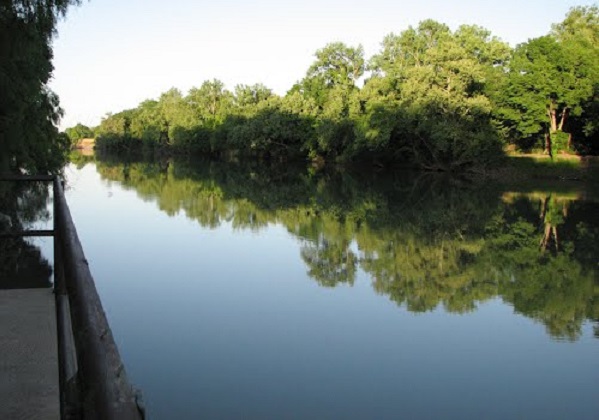
Bastrop State Park, Buescher State Park, and McKinney Roughs Nature Park together protect close to 10,000 acres of the Lost Pines ecosystem. The Colorado River cuts through the heart of the county under LCRA stewardship. The county’s signature ranches and agricultural exemptions cover hundreds of thousands more acres that are protected by ownership, by deed, and by Texas property law.
Add it up and the vast majority of Bastrop County’s roughly 575,000 acres is already protected from anything that looks like Austin sprawl. That is not an accident. That is policy. And every commercial dollar we add to the tax roll strengthens our ability to keep it that way.
$10 Billion Does Not Equal $10 Billion of Bulldozed Ranchland
Here is the part the opposition does not want residents to do the math on. The Big Movers anchor projects sit on a small fraction of one percent of county land. EdgeConneX, Greenport, Wyldwood, SpaceX, and Line204 combined occupy a footprint smaller than a single mid-sized cattle operation in West Bastrop County.
That is the magic of high-value commercial development. It produces $10 billion in valuation on a few thousand acres along a designated growth corridor. The same $10 billion in residential rooftops would consume tens of thousands of acres, fill every school in the county past capacity, and require new fire stations, new schools, new roads, and new wastewater systems countywide.
A data center campus brings a tax base. A tract home subdivision brings a tax burden. The first preserves rural Bastrop. The second eats it.
The Real Choice Is Not Growth Versus No Growth
There is no scenario in which Bastrop County stays exactly the way it was in 2005. We are thirty minutes from the fastest-growing metro in America. Austin is going to keep pushing east on Highway 71 whether we plan for it or not. The only question is what kind of growth meets it at the county line.
Without a commercial corridor strategy, Bastrop becomes another Pflugerville. Wall-to-wall rooftops, strip centers, traffic, and a school district sized for a population three times what we have today. Property taxes rise on every homestead because residential development never pays for itself.
With a commercial corridor strategy, the rooftops slow down, the tax base does the heavy lifting, and the ranches stay ranches because the math finally works for the families who own them.
The Tools That Keep Rural Land Rural
Bastrop County is using every tool available to draw a clear line between the corridor and the countryside.
The Highway 71 spine is where the major projects go. That is where the power, fiber, water, and transportation infrastructure already exists, and that is where additional capacity is being added. Move a mile off the corridor and you are still in working ranchland, still in dark-sky country, still in the Lost Pines.
Floodplain and river setback rules protect the Colorado corridor. Agricultural valuations protect working ranches from being taxed out of existence. Master plan overlays guide where industrial uses can and cannot go. Conservation easements give landowners a way to lock in rural use across generations. The county is actively building these protections into the approval process for new projects rather than leaving it to chance.
How Commercial Growth Funds Preservation
This is the part that gets lost in the noise. Industrial valuation does not just hold property taxes down for residents. It actively funds the things that make Bastrop County Bastrop County.
Bastrop ISD goes from a $25,000-per-year raw land valuation to more than $100 million in tax base on the same acreage once a data center is operating. That money stays local. It funds teachers, school buses, FFA programs, ag barns, and the Friday night lights that have lit Memorial Stadium and Tiger Stadium for generations.
County tax revenue funds road maintenance, sheriff’s patrols, and the Emergency Services Districts that protect the volunteer fire departments in Cedar Creek, McDade, Red Rock, Rosanky, and Smithville. Those volunteer departments exist because rural Bastrop County has a tax base big enough to fund them.
Take away the commercial corridor and that funding has to come from somewhere. It comes from your homestead.
What Stays Exactly the Same
The drive from Smithville to Bastrop on Highway 71 still cuts through pine forest and pasture. The Colorado River still bends through McKinney Roughs the way it has for ten thousand years. The Lost Pines still mark the only loblolly forest west of the Piney Woods. The Smithville Jamboree still fills the square. Calvary at Bastrop still lights up at Easter. The Homecoming Rodeo still packs the stands in September.
Ranchers still ranch. Churches still meet. Volunteer fire departments still fundraise with fish fries and barbecue plates. And for the first time in a generation, the kids who grow up here can finally afford to stay here, because there are six-figure careers within a fifteen-minute drive of the homes they grew up in.
That is not the destruction of rural character. That is the preservation of it.
Leadership That Drew the Line on the Map
The corridor strategy was not handed to Bastrop County by Austin or by the state. It was built here, by leaders who grew up here, who own land here, and who understand that protecting the Bastrop County we love means doing the unglamorous work of planning, zoning, and infrastructure on the right side of the line.
Bastrop County is not going to become Round Rock. It is not going to become Pflugerville. It is not going to become Cedar Park. The plan that put $10 billion of investment along Highway 71 is the same plan that keeps the back roads quiet, the river clean, and the ranches whole.
That is what preservation looks like in 2026. Not a refusal to build, but a refusal to build the wrong things in the wrong places.
The world is building its future here. Bastrop County is making sure that future has room for the past.
Want to see the corridor plan in action? Explore the Big Movers anchor projects shaping our future, or learn how the incentive stack pays back into Bastrop ISD and our local Emergency Services Districts.