
Will the New $10 Billion Tech Boom Drain Bastrop County's Resources?
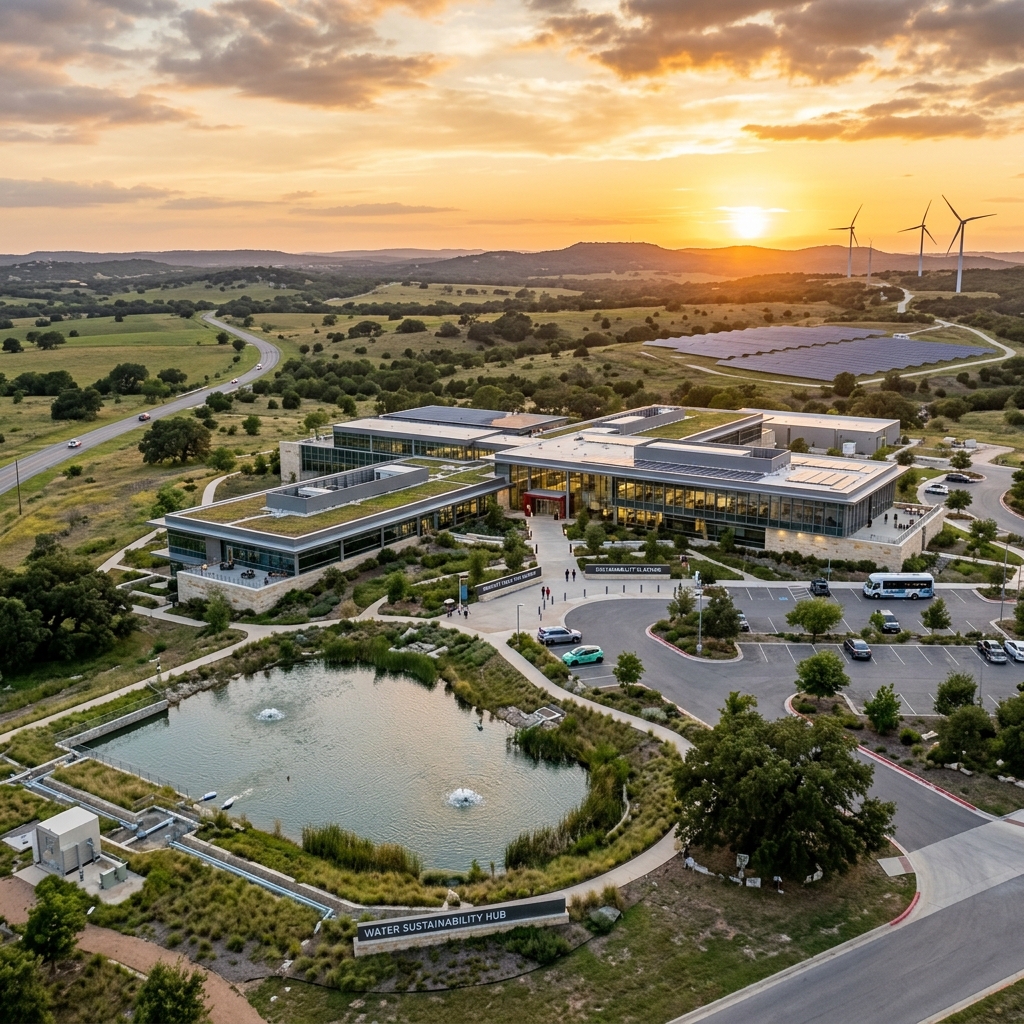
We have heard the community’s concerns regarding the wave of new data centers and semiconductor campuses breaking ground in Bastrop County. As the region experiences a historic $10 billion capital investment pipeline, many residents are naturally asking the critical questions: Will these massive projects crash the local power grid? Will they drain our water supply? And will expensive infrastructure costs be passed onto local taxpayers?
The reality is quite the opposite. These modern tech campuses are designed from the ground up to be powerful, self-sustaining economic engines. They are engineered to secure our community’s long-term prosperity without depleting the local resources that our residents rely on.
Here are the key facts you need to know about how these mega-campuses integrate into Bastrop County:
Independent Power Infrastructure
A major misconception is that commercial tech campuses pull from the exact same power grid as local homes, putting residents at risk for rolling blackouts. In reality, modern tech campuses fund and construct their own dedicated electrical substations directly connected to transmission lines.
Their energy footprint operates completely independently from the standard local residential distribution grid. This means their high-density operations do not strain community resources, nor do they require taxpayer-funded expansions to the grid. In many cases, these corporations also invest heavily in localized renewable energy (like solar arrays) to offset their own footprint.
Advanced Water Conservation
Water is the lifeblood of Texas, and preserving the Colorado River and local aquifers is paramount. Unlike older, legacy manufacturing plants that consume millions of gallons of fresh water daily, modern facilities—particularly data centers—utilize “closed-loop” cooling systems.
This advanced system continuously recycles the exact same water within an enclosed, pressurized pipe network. Because the water is never evaporated or discharged as waste, the system results in essentially zero net draw from municipal drinking water supplies or natural environmental assets once the initial loop is filled.
High-Paying Local Jobs
The tech boom is reversing the “brain drain” of talent leaving Bastrop for Austin. These projects bring an immediate wave of high-paying construction and trades jobs that smoothly transition into permanent, high-tech operations careers.
These facilities require engineers, technicians, security personnel, and facility managers, offering salaries averaging $70,000 to $120,000 for local residents. This creates incredible, generational wealth-building opportunities for our workforce, right here in their hometown.
Massive Tax Benefits for Schools
By transforming historically low-value, undeveloped agricultural land into billion-dollar tech sites, these corporations exponentially increase the county’s commercial tax base.
More importantly, they absorb the heavy cost of county infrastructure. By carrying the tax burden, they actively shift the weight away from individual residential homeowners. The result is a massive financial windfall for local Independent School Districts (ISDs)—providing funding for new facilities, teacher salaries, and advanced STEM programs without raising residential property tax rates.
The Bottom Line
These tier-one projects are not a threat to our rural character or our natural resources; they are an investment in our future. By bringing sustainable design, independent infrastructure, and immense economic value, they ensure Bastrop County remains prosperous for generations to come.