
Line 204 Brings Hollywood Production Infrastructure to Central Texas
Line 204 Brings Hollywood Production Infrastructure to Central Texas
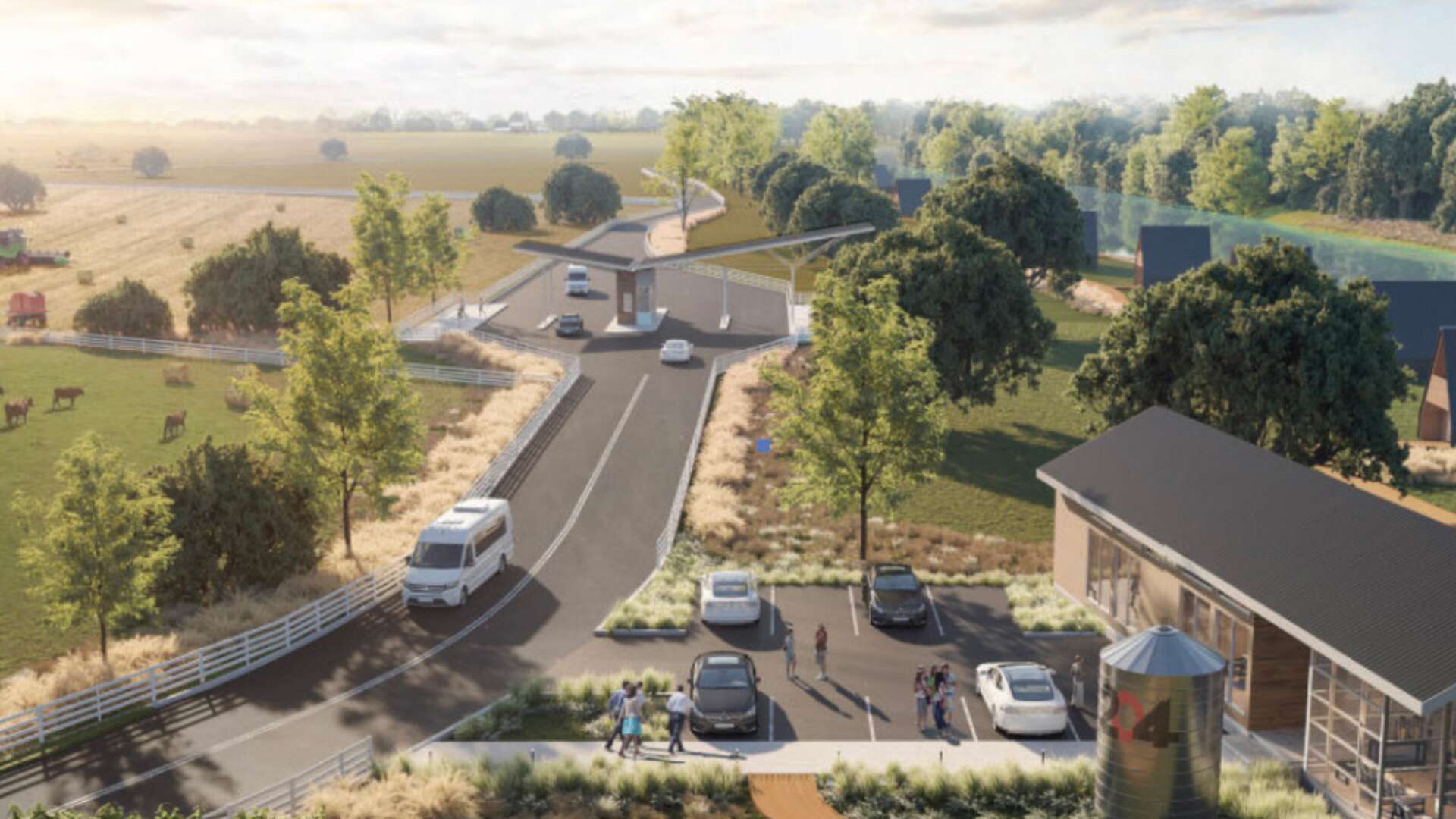
Line 204, the Los Angeles-based production rental company that already serves Netflix, Disney, Warner Bros, Paramount, and Hulu, broke ground in April 2026 on a roughly 600-acre film studio complex on the Colorado River in Bastrop County. Founder Alton Butler is replicating the full Hollywood vendor stack on Texas soil. Eight studios, two 10,000 square foot soundstages, equipment and lighting rentals, prop and wardrobe houses, trucking, mill and warehouse space, and immersive sets. Bastrop County’s economic development team projects a $1.3 billion ten-year impact. Industry sources have pegged the upper estimate at $2 billion.
A Different Kind of Studio Bet
Wyldwood Studios is a creative and lifestyle vision built by an actor who wants to change how Hollywood operates. 204 Texas is a working Hollywood vendor relocating its supply chain.
That distinction matters. Most film studios that break ground in new markets are betting on attracting productions later. Line 204 is bringing the productions with it. Butler’s existing Los Angeles operation already books equipment, soundstages, and props for the studios that drive most of the streaming and theatrical content in North America. Bringing 204 Texas online means those same projects can now choose Bastrop County instead of Burbank, and they will be served by the vendor relationships that already exist.
This is what production infrastructure actually looks like. Soundstages alone do not make a film market. The grip and lighting trucks, the wardrobe houses, the prop warehouses, the mill space for set construction, the trucking and transportation, the food service, the equipment rentals: those are the unglamorous backbone that makes a production possible. Without them, even a finished soundstage is a building without an industry.
Butler is bringing all of it to one place at the same time, which is the move that distinguishes 204 Texas from every other studio buildout currently moving through North America.
The Project at a Glance
Line 204 broke ground in April 2026 after several years of permitting, infrastructure work, and incentive negotiations with the City of Bastrop. The current project specifications, drawn from Bastrop city documents, Community Impact reporting, and Butler’s public statements, include:
- Roughly 600 acres west of Lovers Lane, hugging the Colorado River
- Eight studios plus two 10,000 square foot soundstages
- A three-story office building for production company tenants
- Warehouse with mill space for set construction
- Storage units, trucking facilities, and equipment depots
- A working ranch at the front of the property with a herd of longhorns
- Immersive overnight sets designed for visitor lodging
- A self-contained vendor ecosystem including grip and lighting, props, wardrobe, decor, and food service
The site is being developed under the project name 204 Texas, sometimes referenced in earlier permitting documents as Bastrop 552. The first phase of vertical construction follows the disannexation of the property from the City of Bastrop’s extraterritorial jurisdiction in March 2026, which moved the project under Bastrop County jurisdiction and accelerated the path to construction.
Butler has confirmed an existing supply contract with MBS Studio Equipment, the Los Angeles stage lighting supplier, which means the rental fleet that production crews already know is moving with the company.
The Hollywood Client Roster Comes With
This is the part that distinguishes Line 204 from a speculative studio play.
The existing Line 204 client list, as confirmed by Butler in interviews with KVUE and KXAN, includes Netflix, Warner Brothers, Paramount, Hulu, and Disney. Those are five of the six largest content engines in the United States. They are not aspirational targets for 204 Texas. They are existing customers of the parent company.
When Butler turns on the soundstages in Bastrop, he is not pitching cold to the heads of physical production at major studios. He is calling people who already write him purchase orders. The conversion path from vendor relationship to in-state production is dramatically shorter than the conversion path from new-studio-on-the-block to a major streamer’s location list.
That is why the economic impact projections from the Bastrop Economic Development Corporation and from independent analysts are as large as they are. Butler is not going to be filling 204 Texas with TikTok content. He is going to be filling it with the streaming series, features, and prestige television that his existing clients commission, and they will follow the equipment that has worked for them in Los Angeles into Texas.
The SB 22 and Texas Film Economy Connection
The 204 Texas project is one of the clearest beneficiaries of Senate Bill 22, the 2025 legislation that overhauled the Texas Moving Image Industry Incentive Program.
SB 22 raised the program funding from $200 million to $300 million per biennium, and it locked in $1.5 billion in production grants over the next six years. Texas is now competing directly with Georgia on incentive economics, with the additional advantages of no state income tax, a cash-grant structure rather than transferable tax credits, and a growing in-state crew base.
Adena Lewis, Bastrop County’s Director of Tourism and Economic Development, who has testified before the Texas Legislature in support of film incentives across multiple sessions, characterized SB 22 as the legislation Bastrop County had been waiting for. “I’ve been going to senate hearings for the last five sessions to beg the Legislature to support the film industry,” Lewis said at a March 2026 networking event. The opposition argument she has heard most often, that film incentives are giveaways to “fat-cat Hollywood guys,” misses the structural point. The grants finance Texas spend, Texas crew, and Texas production capacity. Every dollar of the incentive is contingent on Texas activity.
204 Texas is built to capture that activity. Butler chose Bastrop in part because the SB 22 economics finally made the math work. The same is true for Wyldwood, the 1.4 million square foot data center campus that crosses over with film post-production, and the broader Central Texas film cluster that has been quietly building since the 2010s.
What 204 Texas Is Building Around
The film cluster forming in Bastrop County is now meaningful at the regional scale.
204 Texas is breaking ground at the same moment Wyldwood Studios is moving toward its first soundstage opening in 2027. Athena Studios is operating in Bastrop. A separate California-backed studio project has moved through approvals on a 546-acre footprint. Texas State University in San Marcos and the University of Texas at Austin both have substantial film and production programs that feed crew into the regional market. SXSW continues to anchor Austin’s film identity each spring.
A working production needs more than a soundstage. It needs cast and crew within commuting distance, a vendor base that can supply rentals and services on demand, and a deep enough freelance market that a department head can staff a movie in days instead of weeks. Bastrop County is now within striking distance of all three, with 204 Texas providing the vendor base that has been the most stubbornly missing piece.
What Butler Is Saying About the Vision
Alton Butler grew up in a small town in Alabama. He moved to Los Angeles, built Line 204 into a vendor that the major studios depend on, and decided that the next chapter of his career would be planting a flag somewhere outside the established markets. In his own words to KVUE, “I didn’t think Atlanta could be either, but I absolutely, 100% see a Hollywood future in Austin.”
His pitch for 204 Texas is structural, not sentimental. The complex is designed to bring the entire Hollywood production ecosystem to one self-contained location, where rural and small-town Texas talent has the same access to the industry that Burbank and Atlanta have had for decades. He has publicly committed to partnering with Texas State, the University of Texas, and local high schools to bring students onto active sets. He has framed the project as an economic opportunity for rural America rather than a coastal transplant.
That framing matters. It is the same framing that has built support across Bastrop County’s mixed political environment for the broader Big Movers wave, and it is consistent with the message that the BEDC and the Bastrop County Commissioners Court have been carrying for the past several years. Bring the high-skill, high-wage industries here, build the workforce locally, and let the rural character of the county be the asset rather than the liability.
The Honest History
Like Greenport and Wyldwood, 204 Texas has a project history worth being honest about. The original Bastrop 552 approval came from the Bastrop Planning and Zoning Commission and City Council in 2021. The path from that approval to the April 2026 groundbreaking ran through several years of water and utility infrastructure work, permitting issues, regulatory hurdles, and incentive negotiations with the city.
That delay is not unique to 204 Texas. Almost every project of this scale in Central Texas right now has a multi-year permitting and infrastructure runway behind it. What changed in 2024 and 2025 was the convergence of three things: SB 22 created the incentive economics, the disannexation under Senate Bill 2038 moved the project to county jurisdiction with fewer development restrictions, and the broader Bastrop County cluster reached enough scale that Butler’s confidence in the location hardened.
The April 2026 groundbreaking is not a hypothetical. Construction is moving. Vertical buildings will follow on a phased schedule. The first productions are expected to land on the lot well before the full 600-acre buildout is complete.
What It Means for Bastrop County
Bastrop County’s economic development team has projected the 204 Texas direct, indirect, and induced economic impact at approximately $1.3 billion over ten years. Earlier industry estimates placed the upper end at $2 billion across the same window. Even at the conservative number, this is a substantial impact for a county the size of Bastrop.
The job profile is different from the data center and semiconductor anchors. Film and television production employment is heavily freelance and project-based, but the durable employment base around a working studio includes:
- Permanent operations staff at the studio itself
- Mill and set construction crews on continuous rotation
- Equipment and rental warehouse staff
- Prop, wardrobe, and decor specialists
- Trucking and transportation drivers
- Hospitality and food service staff supporting productions
- Administrative, finance, and legal support for production rentals
When a major production is on the lot, that base employment is supplemented by the actors, directors, department heads, grips, gaffers, electricians, sound technicians, set carpenters, and production assistants who staff the actual show. A meaningful share of those production roles are union jobs through IATSE Local 484 in Austin, with strong wages and project-specific tax revenue impact.
The hospitality benefit is its own economic story. Productions book hotels, restaurants, vehicle rentals, and local service providers in volume during the run of a project. Smithville, Bastrop, Cedar Creek, and Elgin small businesses see that spend directly, the same way Austin restaurants and hotels have benefited from SXSW and from the Austin film market for the past two decades.
The Bigger Texas Story
The Texas film economy in 2026 is unrecognizable from the Texas film economy of 2020. Hill Country Studios in San Marcos broke ground on a $267 million campus. Austin Studios continues to expand. Wyldwood is moving toward its first opening. Multiple smaller studios across Central Texas are building or expanding. SB 22 is funding $1.5 billion in production grants over six years.
204 Texas is the working backbone of that wave. Wyldwood may carry the brand name. Hill Country may carry the Austin proximity. But the production infrastructure, the vendor stack, the day-to-day equipment and supplies that make a working production possible, is what 204 Texas is building, and it is what every other studio in the region needs to function.
When the first major Netflix series shoots on Texas soundstages with Texas grip and lighting from Texas vendors, fed by Texas crews, that is the moment the Texas film economy has finally hit critical mass. 204 Texas is the most important single piece of the answer to whether that moment arrives in 2027, 2028, or 2030.
The world is building its future here. A meaningful share of that future is going to be on screen, and a meaningful share of those screens are going to be filmed in Bastrop County.
Want the full picture? Read about Wyldwood Studios and why Zachary Levi chose Bastrop over Atlanta, explore the Big Movers anchor projects, or learn how the twelve trades and degrees Bastrop County students should pursue right now include the union film crafts that 204 Texas will be hiring.